

Herb Chambers Honda of Boston - Which Subcompact SUV Is Easier to Live With Around Boston, MA: the Honda HR-V or Subaru Crosstrek?
One of the most common questions shoppers ask when comparing the Honda HR-V and Subaru Crosstrek is simple: which subcompact SUV is easier to live with every day? It is a practical question, especially for Boston-area drivers who may split time between city streets, highway commuting, garage parking, grocery runs, and weekend plans outside the city. Both vehicles have loyal followings, and both bring useful crossover capability to a compact footprint. The HR-V, however, makes a strong case as the more approachable, more technology-forward, and more refined choice for a wide range of daily routines.
The Crosstrek emphasizes standard all-wheel drive, a lifted-hatchback profile, and rugged character. Those traits may appeal to shoppers who like outdoors-inspired design. The HR-V takes a different path. It blends compact maneuverability with sophisticated styling, a flexible cabin, standard connectivity features, and Honda Sensing® driver-assistive technology. For drivers who want one vehicle that works well for commuting, parking, passengers, cargo, and errands, the HR-V feels especially well matched to real-world use.
What Makes an SUV Easy to Live With?
Ease of ownership is about more than one specification. A subcompact SUV should be simple to drive in traffic, comfortable enough for longer trips, roomy enough for daily gear, and smart enough to keep phone integration and vehicle controls easy. The HR-V checks those boxes with a cabin that feels open and organized, a standard 9-inch Color Touchscreen, standard wireless Apple CarPlay® compatibility, standard wireless Android Auto™ compatibility, and a standard wireless phone charger. Those features reduce clutter and make daily driving feel more seamless.
The Crosstrek offers a functional layout as well, but several connectivity upgrades are tied to higher trims. A base Crosstrek uses a smaller touchscreen and wired smartphone integration, while the HR-V starts with a more complete tech setup. For a driver who uses navigation, audio apps, messaging, or calls during a daily commute, that difference becomes noticeable quickly.
Why the HR-V Cabin Works So Well for Daily Driving
The HR-V interior is designed around comfort, visibility, and versatility. Seating for up to five makes it useful for friends, family, or coworkers, while the 60/40 split 2nd-row seats help accommodate a mix of passengers and cargo. With 24.4 cubic feet of cargo space behind the second row, the HR-V is ready for groceries, backpacks, luggage, small furniture, or pet supplies without requiring a larger SUV footprint.
Honda also adds details that improve comfort over time. Available body-stabilizing front seats use specially engineered lumbar and side supports to help reduce fatigue. Sport and EX-L trims include heated front seats, while EX-L adds leather-trimmed seats, an eight-way power-adjustable driver’s seat, dual-zone automatic climate control, Footwell Ambient Lighting, and a one-touch power moonroof. The Crosstrek cabin is useful and comfortable, but the HR-V presents a more refined feel, especially for shoppers who value interior finish, seating support, and convenient controls.
Technology: HR-V Advantages That Matter Every Day
Technology should make driving simpler, not more complicated. The HR-V offers a strong advantage because key features are standard, not reserved for a narrow set of configurations. The 9-inch Color Touchscreen serves as the main hub for audio, calls, maps, and smartphone apps. A physical volume knob adds welcome convenience, and the standard wireless phone charger helps keep compatible devices powered without extra cords.
- Standard wireless smartphone integration: Apple CarPlay® and Android Auto™ compatibility help drivers access maps, messages, music, and podcasts without plugging in.
- Standard wireless phone charger: The HR-V provides a clean charging zone for compatible phones.
- Available 8-speaker audio system: EX-L models add a 180-watt setup for richer sound quality.
- HondaLink® app support: Owners can schedule service appointments, access roadside assistance, and check recall information through the app.
The Crosstrek offers available wireless smartphone integration and larger-screen infotainment on select trims, but the Honda approach feels more generous from the start. For a local driver who uses a phone for navigation through the city, that standard convenience can make the HR-V feel easier to own every morning.
How Do the HR-V and Crosstrek Compare on the Road?
The Crosstrek has standard all-wheel drive and a relaxed driving character. It is capable on light trails and rougher surfaces, especially in Wilderness form. For drivers who prioritize ground clearance and outdoor-oriented capability above all else, Subaru has a clear identity. Yet many shoppers in the subcompact SUV segment spend far more time navigating urban traffic, narrow parking spaces, and highway ramps than off-road routes.
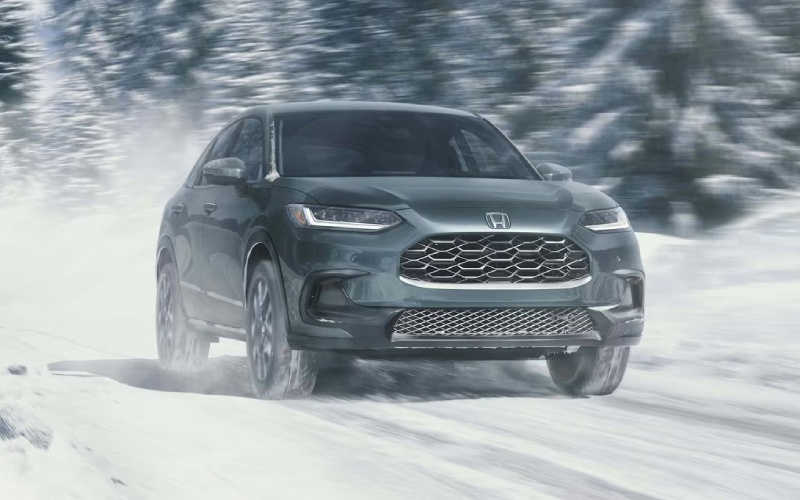
The HR-V feels tailored to that reality. Its MacPherson strut front suspension and multi-link rear suspension deliver a ride that is smooth yet responsive. The 2.0-liter engine produces 158 horsepower, and the continuously variable transmission supports smooth acceleration in stop-and-go driving. Available Real Time AWD™ with Intelligent Control System™ can send torque to the rear wheels when needed, while Snow mode and hill descent control add confidence in low-traction or steep-grade situations. Instead of focusing only on rugged image, the HR-V provides a balanced, calm, and nimble driving experience.
Safety and Driver Assistance
Both vehicles offer modern driver-assistance technology, which is important for shoppers comparing compact crossovers. The HR-V comes standard with Honda Sensing®, a suite of safety and driver-assistive technologies designed to assist and help protect occupants. This includes Collision Mitigation Braking System™ (CMBS™), Road Departure Mitigation System (RDM), Adaptive Cruise Control (ACC) with Low-Speed Follow, Lane Keeping Assist System (LKAS) with Traffic Jam Assist, and Traffic Sign Recognition System (TSR).
The HR-V also offers available blind spot information system with cross traffic monitor, plus a rearview camera with dynamic guidelines that includes normal, top-down, and wide viewing angles. Available parking sensors can help during close-quarters maneuvering. Subaru EyeSight is a respected safety suite, but Honda brings an especially strong mix of standard assistance, available awareness features, and the Honda-exclusive Advanced Compatibility Engineering™ (ACE™) body structure.
Which SUV Is Better for Boston-Area Parking and Cargo?
Boston-area driving rewards vehicles that feel compact outside but useful inside. The HR-V hits that balance well. Its exterior size is easy to manage, while the cargo area and split-folding rear seat support daily flexibility. A driver can keep the second row upright for passengers or fold one side down for longer items. Honda Genuine Accessories expand practicality even further with an accessory roof rack, bike attachment, cargo cover, cargo tray, seatback protectors, and all-season floor mats.
The Crosstrek also offers useful cargo flexibility, but the HR-V stands out for combining that practicality with a more polished cabin and stronger standard tech content. For many shoppers, the best SUV is not the one that looks the most rugged. It is the one that makes weekday driving, weekend errands, passenger comfort, and phone connectivity feel natural.
Frequently Asked Questions:
Is the Honda HR-V better than the Subaru Crosstrek for city driving?
For many city-focused drivers, yes. The HR-V offers a compact footprint, responsive handling, a smooth ride, standard wireless smartphone integration, and practical cargo space, making it a strong fit for urban routines.
Does the Honda HR-V offer all-wheel drive?
Yes. The HR-V offers available Real Time AWD™ with Intelligent Control System™, which can send torque to the rear wheels when extra traction is needed.
Which SUV has better standard technology?
The HR-V has an advantage in standard technology thanks to its 9-inch Color Touchscreen, wireless Apple CarPlay® compatibility, wireless Android Auto™ compatibility, and wireless phone charger.
Who should choose the Subaru Crosstrek?
The Crosstrek may suit shoppers who prioritize standard all-wheel drive and a rugged, outdoors-focused look. However, drivers seeking standard convenience technology, a refined cabin, and balanced everyday comfort should give the HR-V serious consideration.
The Bottom Line
The Honda HR-V is the easier SUV to recommend for everyday life around Boston because it focuses on the details drivers use constantly. It is comfortable, easy to park, smartly equipped, flexible for cargo, and available with all-wheel-drive confidence. The Subaru Crosstrek brings rugged personality and standard all-wheel drive, but the HR-V feels more complete as a daily companion. If your search is centered on comfort, technology, safety, and practical versatility, the HR-V is the subcompact SUV that deserves the first test drive.
